On this page
Key facts
- Ways to buy
- Local importer or dealer, private sale, import it yourself
- Papers to see
- HS-7, EPA 3520-1, CBP 7501 or release, export certificate with translation, bill of sale
- Biggest deal-breaker
- Rust in the frame or underbody
- Assume due unless documented
- Timing belt and water pump on belt-driven engines
- Age check
- Built 25 or more years before it was entered in the US
- Check first
- Whether your state will register it for the road
There are three ways to get a Kei Truck in the US, and each one moves the work and the risk to a different person. Whichever you choose, two checks come before any money moves: will your state register it, and is the paperwork complete.
Where can you buy a Kei Truck in the US?
You have three main routes: a local importer or dealer, a private seller, or importing one yourself.
| Route | What works | What to watch |
|---|---|---|
| Local importer or dealer with trucks on the lot | You see, hear and drive the truck. Papers are in hand, and some sellers add a warranty. | The highest price, and only the trucks they chose to bring in |
| Private sale | Often the lowest price for a truck that is already here | No recourse if something is wrong, and paperwork quality varies |
| Import it yourself | The whole Japanese market to choose from, usually at the lowest total cost | 6-12 weeks of waiting, and you buy from photos and an auction sheet |
Some importers also buy to order. You pick a truck from Japanese listings, and they handle everything to your door. That is the import route with a service fee added, and you still buy from photos.
Online auctions and listing sites sit somewhere in between. Fees, return rules and access for an inspection vary, so read the terms before you bid.
If you plan to import, our step-by-step guide to importing a Kei Truck covers the process, and the Kei Truck cost guide shows what each route usually adds up to.
What paperwork should come with a Kei Truck?
A legally imported Kei Truck should come with at least five documents: DOT form HS-7, EPA form 3520-1, the customs entry, the export certificate and a bill of sale. A seller who has them can usually produce them in minutes. Ask to see:
- DOT HS-7, box 1 marked. The federal declaration that the truck had reached 25 years when it was imported.
- EPA 3520-1 with code E. The emissions declaration for a vehicle 21 or more years old in original configuration.
- CBP Form 7501 or the customs release. Proof the truck cleared customs, with the entry date on it.
- Export certificate with a certified English translation. The Japanese deregistration paper, showing the chassis number and the first-registration date.
- Bill of sale. From the seller to you, and ideally copies of the chain back to the importer.
- A US title, if one has been issued. Note the state and any brand printed on it.
- The auction sheet, if there is one. It records condition and mileage before export.
Check that the chassis number on every document matches the number stamped on the frame. Keep copies of the import papers even after you have a title, because some DMVs ask for them again when you move.
What are the red flags when buying a Kei Truck?
- Under 25 at import. Compare the build month with the entry date on the customs papers. A truck that came in early may never be registrable.
- Off-road status. Trucks brought in under 25 as off-road equipment had to be limited to 25 mph and certified only for nonroad use. A title, certificate of origin or VIN label marked off-road, or not for highway use, usually stays that way.
- Missing import papers. "It's titled, you don't need those" is not good enough. Without the federal forms, some states won't title the truck in your name.
- Title washing. A title from a lenient state, or one that lost a brand when it changed states, can hide a history that blocks registration where you live. Ask where and when each title was issued.
- Plates from an out-of-state company. A truck registered through an LLC in another state may not transfer to you cleanly.
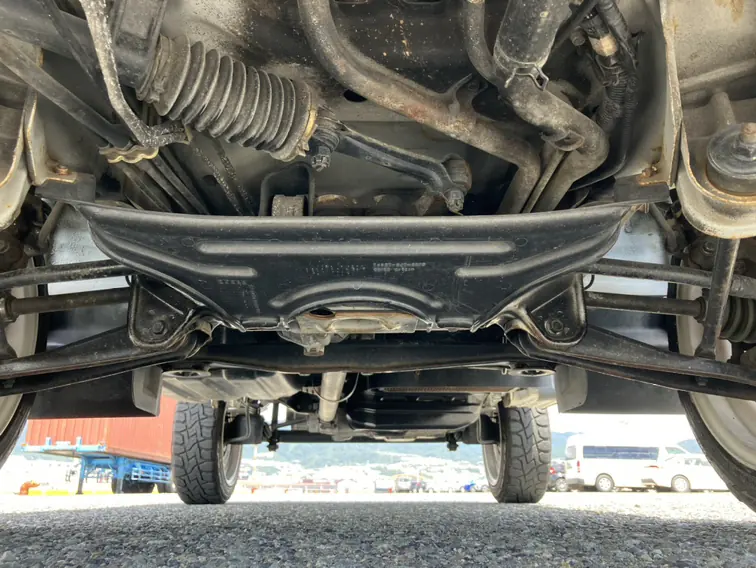
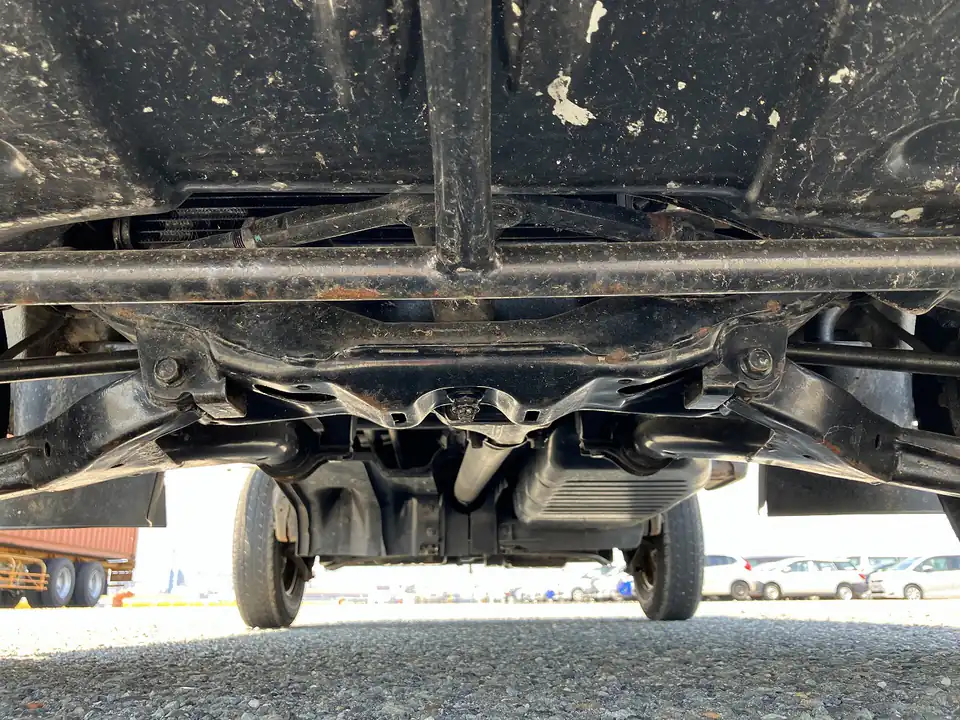
- Flood or salt damage. Look for silt under the floor mats, corroded seat rails, a musty smell and flaking scale on the frame.
- Mileage doubts. The odometer reads kilometers. A replaced cluster, or a reading the auction inspector flagged, means the number can't be trusted.
How do you inspect a Kei Truck before you buy it?
Bring a flashlight, something to lie on and an hour. Start the engine cold if the seller will let you.
Frame, cab and bed rust
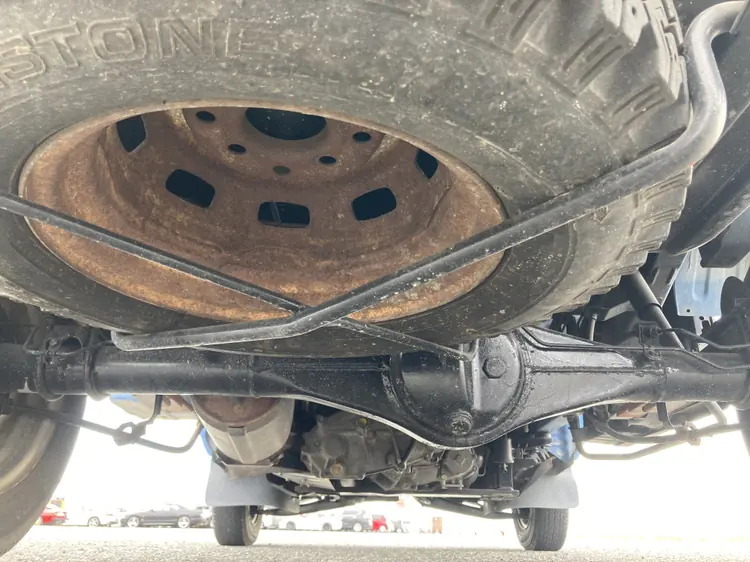
Rust is the one fault that writes a Kei Truck off. Check the frame rails, especially behind the front wheels and under the bed, then the cab corners and floor, the rocker panels, and the bed floor and seams. Light surface rust in the bed is only cosmetic. Flaking scale or holes in the frame are not. Press gently with a screwdriver on anything that looks soft.
4WD, diff lock and low range
Engage four-wheel drive on the spot, on gravel or grass if you can. Try the low range if the truck has one and the rear diff lock if it is fitted. Trucks that worked flat farmland may not have used these in years. Listen for grinding, and make sure each one disengages cleanly.
Clutch and gearbox
Note where the clutch bites. One that catches at the very top of the pedal travel is close to worn out. Pull away uphill in a high gear to check for slip. Shift through every gear, cold and warm. Grinding into second or third points to worn synchros. On trucks with a hydraulic clutch, look for fluid seeping at the master and slave cylinders. If the clutch is tired, replacement clutch parts are a common first repair.
Cooling system
Overheating is what turns cheap Kei Truck ownership expensive. With the engine cold, check the coolant level and color. Watch the temperature gauge through a long idle and make sure the fan cycles on. Look along every hose you can reach for seepage and soft spots, and check the radiator and cap for crust or leaks.
Timing belt record
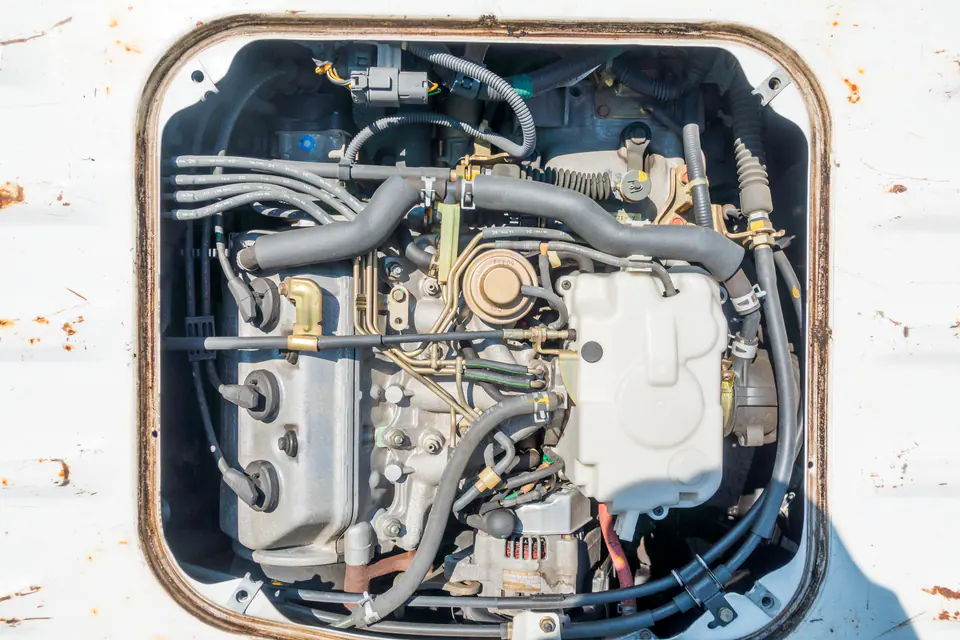
Most Kei engines in the 25-year window use a timing belt, commonly changed around every 100,000 km, or about 60,000 miles. Ask for a receipt. On several of these engines a broken belt can bend valves, so no paperwork means you budget for the job.
Carbureted or fuel-injected
Early-1990s trucks are often carbureted. They are simple, but one that sat for months can idle poorly and start hard until the carburetor is cleaned. Later trucks are fuel-injected and usually start easily. Either way, a cold start tells you more than a warm one.
Brakes, steering, tires and lights
Check for a firm pedal and a straight stop. Feel for play in the steering. Read the tire date codes, not just the tread. On 4WD trucks, check the boots on the front axles, because a torn CV boot lets grit destroy the joint. Test every light, the horn and the wipers, since a state inspection may check them.
Many of these checks mirror what a Japanese auction inspector looks at. Our guide to reading an auction sheet shows how to compare the sheet with the truck in front of you.
What should you do in the first week of owning a Kei Truck?
Assume nothing was done unless you have a receipt. For a truck with an unknown history, a sensible first-week list is:
- Timing belt, tensioner and water pump on belt-driven engines, using a timing belt kit.
- Engine oil and filter, plus the air and fuel filters from a filter set.
- Spark plugs and, on older trucks, the rest of the ignition parts.
- A coolant flush, with new hoses if they are soft or cracked.
- Gear oil in the transmission and differentials, plus the transfer case on 4WD trucks.
- Fresh brake fluid, and a look at the pads, shoes and hoses.
- Tires checked by date code, and a battery test.
- Lights, mirrors and wipers working for inspection, plus a plate adapter for the US plate.
Our maintenance guide has intervals and notes for each engine.
How much should you pay for a Kei Truck?
US sellers often ask $6,000-12,000 for a running Kei Truck, with collector-grade trucks above that (estimate). Condition, configuration and where you live all move the number. Our cost guide shows what the same truck would cost to import, which gives you a yardstick for any asking price.
Several things push a price up: factory 4WD with a diff lock, air conditioning, a dump or specialty bed, low mileage you can verify and a clean frame. Others should bring it down: rust, no timing belt record, a carbureted engine that won't idle and thin paperwork. Treat a truck with no import papers as a parts truck until they turn up.
Before you pay, confirm your state on our state law map and the truck's age with the 25-year rule.
Find parts for your truck
Pick your model and chassis code. We'll send you to the right Oiwa Garage collection.
Frequently asked questions
Where is the best place to buy a Kei Truck?
It depends on how much effort and risk you want to take on. A local importer or dealer costs the most but lets you inspect the truck first. A private sale can be the cheapest way to get one that is already here. Importing yourself gives the widest choice and the lowest cost, but you wait 6-12 weeks and buy from photos.
What paperwork should a Kei Truck come with?
Look for the HS-7 form with box 1 marked, the EPA 3520-1 with code E, the CBP Form 7501 or release, the Japanese export certificate with a certified English translation, and a bill of sale. If it already has a US title, note the issuing state and any brand. The chassis number should match on every document.
How can I tell if a Kei Truck was old enough to import legally?
Compare the build month with the entry date on the customs paperwork. The truck had to be 25 years old when it was entered. The export certificate shows the first-registration month in Japan, which comes after the build. A truck entered before its 25th year may have come in as off-road equipment.
Is it safe to buy a Kei Truck sight unseen?
It can work, but you are trusting photos, a seller and usually an auction sheet. Ask for the original sheet, underside photos, a cold-start video and a clear shot of the chassis number. Budget for a timing belt and a full fluid service, and pass on any truck with frame corrosion, whatever the price.
What does a newly bought Kei Truck usually need?
Plan on a timing belt and water pump unless there is a receipt, plus oil, filters, plugs, coolant, gear oil and brake fluid. Old tires and a tired battery are common. Many trucks also need a US plate adapter and working lights, mirrors and wipers before a state inspection.
Can I register a Kei Truck that was titled in another state?
Often, but not always. Your state applies its own rules, not the old state's, so an out-of-state title won't help if your state limits or refuses Kei Trucks. Bring the title along with the import papers, because some offices ask to see the HS-7, the EPA form and the customs entry again.