On this page
Key facts
- Typical price from a US seller
- $6,000-12,000 (estimate)
- Typical import-it-yourself total
- $5,500-9,500, titled and serviced (estimate)
- Duty on a Kei Truck
- 25% of the price paid (HTS 8704.31.01)
- Duty on a passenger-type Kei Van
- 12.5% in total as of October 2026 (2.5% base plus Section 301)
- Merchandise Processing Fee
- 0.3464%, $34.58 minimum, $670.86 maximum (from Oct 1, 2026)
- Harbor Maintenance Fee
- 0.125% of value
- Section 232 auto tariff
- Does not apply to vehicles 25 or more years old
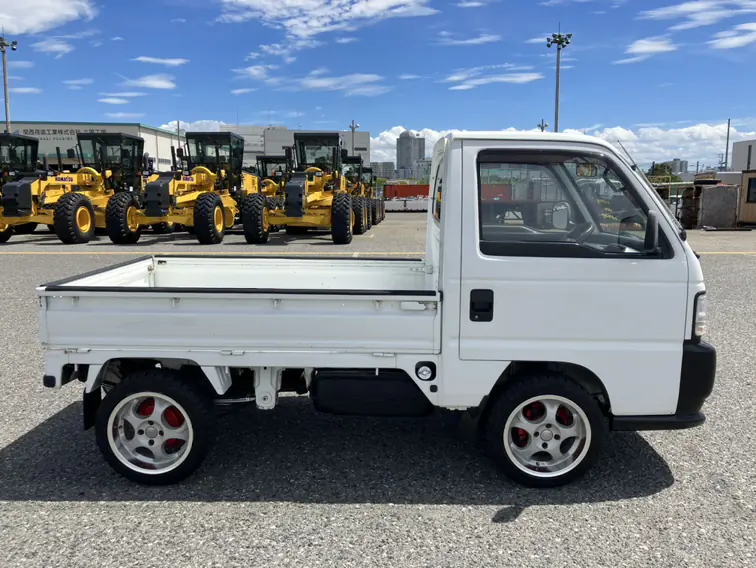
A Kei Truck's price is a stack, not a sticker. There is the truck, the trip across the Pacific, the government's share, and the cost of making it legal and ready at home. This page prices each layer with October 2026 rates.
Figures marked as estimates are typical ranges, not quotes. Government rates are exact and cited.
How much is a Kei Truck in 2026?
In October 2026, most running Kei Trucks cost $6,000-12,000 from a US seller, or about $5,500-9,500 if you import one yourself and title it (estimates).
| How you buy | Typical all-in cost (estimate) | What the money buys |
|---|---|---|
| From a US seller with the truck on the ground | $6,000-12,000 | A truck you can see and drive, with a title or import papers in hand |
| Import it yourself, then title and service it | $5,500-9,500 | The widest choice and usually the lowest cost, after a 6-12 week wait |
| Collector-grade truck: supercharged, dump bed or very low miles | $10,000 and up | Rare configurations, by either route |
Importing usually saves money, but not always much. The gap shrinks with a pricier truck in Japan, an East Coast port, a long haul home or a surprise at the port.
Work out your own landed cost
The calculator below uses October 2026 government rates and typical service charges. Change any number to match the quotes you get.
Kei Truck landed cost calculator
Check today's rate. It moves.
Export paperwork, deregistration, inland transport to port.
Usually 0% for a 25-year truck. See the note below.
Filters, plugs, fluids and a timing belt kit.
Estimates only. Duty is figured on the price you paid for the truck. As of October 2026 no extra tariff applies to a 25-year Kei Truck from Japan. Section 232 auto duties exempt vehicles built 25 or more years before the entry year, and the Section 301 duty that began July 24, 2026 is zero on Japanese goods whose base rate is 12.5% or more. The van rate already includes the Section 301 top-up (2.5% base plus 10%). Your customs broker has the final numbers, and tariffs can change with little notice.
What does a Kei Truck cost in Japan?
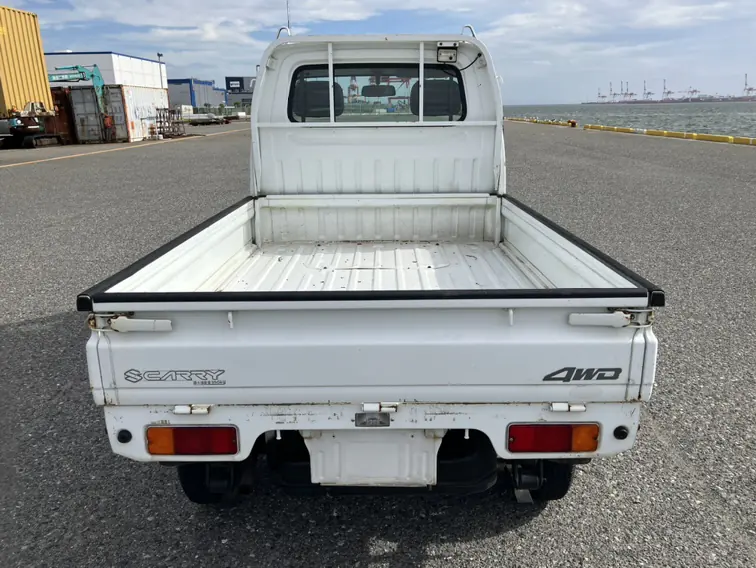
In Japan, a running Kei Truck old enough to import typically costs $1,500-3,500, with cleaner and special trucks higher. These are typical asking ranges, converted to dollars (estimates).
| Truck | Typical price in Japan (estimate) |
|---|---|
| 1990s truck with honest wear | $1,500-3,000 |
| 1999-2001 truck in good running order | $2,000-3,500 |
| Cleaner, lower-mileage truck with 4WD, diff lock or A/C | $3,000-5,000 |
| Supercharged, dump bed, jumbo cab or collector condition | $4,000-8,000 or more |
Dealer auctions usually sell below retail, and exporters selling from stock build their service into the price. The exchange rate matters more than most buyers expect. On a ¥400,000 truck, a move from ¥150 to ¥160 per dollar changes your cost by about $167.
What does it cost to ship a Kei Truck to the US?
Getting a truck from a Japanese lot to a West Coast port typically adds $1,900-4,200 in fees and freight. Three charges make up that total (estimates):
- Exporter or auction agent fee: $500-1,200. This covers buying, deregistration, export paperwork and the ship booking.
- Japan inland transport and export handling: $200-500. Often bundled into the fee above, so ask.
- Ocean freight: about $1,200-2,500 to a West Coast port and $2,000-3,500 to the Gulf or East Coast. Roll-on/roll-off (RoRo) shipping is the usual choice for a truck that runs. A container costs more unless you share one.
Marine insurance is optional. It typically runs 1-2% of the truck's value (estimate).
How much duty and tariff do you pay on a Kei Truck in October 2026?
A Kei Truck pays 25% duty. U.S. Customs and Border Protection, or CBP, classifies Kei Trucks as goods vehicles under HTS 8704.31.01, as its rulings on a 1999 Subaru Sambar (N351601) and a 1990 Honda Acty (N359221) show. The 25% rate on light trucks dates to 1964 and is often called the chicken tax.
Duty is charged on the price actually paid for the truck. Federal law leaves the cost of international shipping and insurance out of that price (19 U.S.C. 1401a(b)(4)(A)). Have the seller list the truck separately from fees, and let your broker decide which Japan-side charges belong in the value.
Extra tariffs, layer by layer
| Tariff layer | Applies to a 25-year Kei Truck from Japan? |
|---|---|
| Section 232 auto tariff, since April 3, 2025 | No. CBP exempts vehicles whose build year is 25 or more years before the entry year (tariff heading 9903.94.04). |
| US-Japan agreement auto rate, Executive Order 14345 of September 2025 | No. It sets the Section 232 rate for Japanese vehicles that pay Section 232, and a 25-year truck doesn't. |
| IEEPA reciprocal tariffs | No longer. The Supreme Court held on February 20, 2026 that the emergency powers law doesn't authorize tariffs, and collection ended February 24, 2026. |
| Section 122 surcharge of 10% | No longer. It ran from February 24 to July 24, 2026. |
| Section 301 duties, since July 24, 2026 | Adds nothing to a truck. Japanese goods with a base rate under 12.5% are topped up to 12.5% in total, and a truck already pays 25%. |
If you imported a Kei Truck in 2025 or early 2026 and paid an IEEPA tariff, ask your broker whether a refund applies to your entry.
Kei Vans are classified case by case
A Kei Van can land under either heading. In January 2026, CBP classified a Subaru Sambar Van and a Suzuki Every as passenger vehicles under heading 8703, pointing to rear seats with permanent anchor points, side windows and rear comfort features (ruling H302977). In August 2026, it put a 1999 Honda Acty Van with a fold-down rear seat and no rear belts under 8704, the truck heading (ruling N364403).
A passenger-type van starts at a 2.5% base duty. The Section 301 action tops Japanese goods with a base rate under 12.5% up to 12.5% in total. By our reading of the tariff schedule, the 301 exemption for cars and light trucks only covers vehicles that pay Section 232, so a 25-year van from Japan most likely pays 12.5%. Confirm it with your broker before you buy. Our Kei Van guide covers which vans have rear seats.
Worked example: government charges on a $2,500 vehicle
| Charge | Kei Truck (8704) | Passenger-type Kei Van (8703) |
|---|---|---|
| Base duty | $625.00 (25%) | $62.50 (2.5%) |
| Section 301 duty | $0 | $250.00 (10%) |
| Merchandise Processing Fee, formal entry | $34.58 (minimum) | $34.58 (minimum) |
| Harbor Maintenance Fee (0.125%) | $3.13 | $3.13 |
| Total to the government | $662.71 | $350.21 |
On an informal entry, available at $2,500 or less, the processing fee drops to a flat $2.77-12.45.
What customs fees, bonds and broker charges should you expect?
The Merchandise Processing Fee and Harbor Maintenance Fee are fixed by regulation. The rest are market prices (estimates).
| Charge | Amount | Notes |
|---|---|---|
| Merchandise Processing Fee, formal entry | 0.3464%, $34.58 minimum, $670.86 maximum | Fiscal 2027 rates from October 1, 2026. Trucks valued under about $9,980 pay the minimum. |
| Merchandise Processing Fee, informal entry | $2.77-12.45 flat | For a value of $2,500 or less |
| Harbor Maintenance Fee | 0.125% of value | Charged on ocean cargo |
| ISF filing and ISF bond | $75-200 (estimate) | Required for ocean shipments |
| Customs bond for a formal entry | $50-150 (estimate) | Usually a single-entry bond through your broker |
| Customs broker entry fee | $150-400 (estimate) | Some quote the ISF, bond and entry as one package |
| Terminal handling, storage and drayage | $100-500 (estimate) | Storage starts after the free days; drayage is the short haul out of the terminal |
| Exam or agriculture wash, if ordered | A few hundred dollars (estimate) | Only if customs or agriculture inspectors flag the truck |
What does a Kei Truck cost after it lands?
- Getting it home: $200-1,500 (estimate). Distance drives the price. Collecting it yourself with a trailer is cheapest.
- Title, registration and tax. These vary widely by state. Most states charge sales or use tax on the purchase price, plus title and plate fees. Some states won't register a Kei Truck for road use at all, so check your state's rules first.
- Insurance. Some standard insurers decline Kei Trucks. Get a written quote before the truck ships.
- First service: $300-900 in parts if you do the work (estimate). Unless there's a receipt, assume the timing belt and water pump are due on belt-driven engines. Add filters, a tune-up kit, fluids, tires by date code and a plate adapter for the US plate.
Is it cheaper to import a Kei Truck yourself?
Usually, but by less than the raw Japanese prices suggest. Here is one mid-range example to a West Coast port. Every line is an estimate except the government charges, which use October 2026 rates.
| Line item | Example |
|---|---|
| Truck in Japan | $2,500 |
| Exporter fees and Japan inland transport | $1,000 |
| RoRo freight to the West Coast | $1,800 |
| Duty at 25% | $625 |
| Processing and harbor fees | $38 |
| ISF filing and bond | $125 |
| Broker fee and entry bond | $450 |
| Terminal charges | $250 |
| Landed at the port | $6,788 |
| Transport home | $600 |
| Title, registration and tax | $350 |
| First-service parts | $500 |
| In your driveway | $8,238 |
Against typical US asking prices, that example saves anywhere from nothing to a few thousand dollars, depending on the truck you compare it with. The trade-off is that you can't see the truck first, you wait 6-12 weeks, and any surprise at the port or the DMV is yours to solve.
If those trade-offs suit you, our step-by-step guide to importing a Kei Truck is the place to start. If not, our guide to buying a Kei Truck covers local options and what to inspect. Either way, confirm the truck's age with the 25-year rule before you pay.
Frequently asked questions
Why is there a 25% tariff on Kei Trucks?
Kei Trucks are classified as light goods vehicles under HTS 8704, and the general US duty on that heading is 25%. The rate dates to 1964 and a trade dispute over poultry, which is why people call it the chicken tax. The 25-year exemption covers safety standards, not duty, so every legal import pays it.
Do Kei Trucks pay the Section 232 auto tariff?
No, not if they are old enough to import. CBP's guidance exempts used vehicles whose build year is 25 or more years before the entry year, and a legal 25-year Kei Truck always meets that test. The 2025 US-Japan deal only changed the rate for Japanese vehicles that do pay Section 232.
Is import duty charged on shipping costs?
No. US customs value starts from the price actually paid for the truck, and federal law leaves out international freight and insurance. Ask your seller to show the truck price separately on the invoice. Whether a Japan-side service fee counts toward value depends on what it pays for, so let your broker make that call.
Are Kei Vans cheaper to import than Kei Trucks?
Sometimes. A van that CBP treats as a passenger vehicle, with rear seats that have belts or anchor points and side windows, carries a 2.5% base duty, which comes to 12.5% in total with the 2026 Section 301 duty on Japanese goods. A cargo-style van without rear restraints can be classified as a truck and pay 25%.
How much is the Merchandise Processing Fee on a Kei Truck?
On a formal entry it is 0.3464% of value with a $34.58 minimum, so any truck valued under about $9,980 pays $34.58 from October 1, 2026. A truck worth $2,500 or less that goes through informal entry pays a flat fee instead, between $2.77 and $12.45 depending on how the entry is filed.
Can tariffs change while my Kei Truck is on the ship?
Yes. The rates that apply are the ones in force when the truck is entered at the US port, not when you paid for it. Tariff rules changed several times in 2025 and 2026. When the July 2026 Section 301 duties began, goods already loaded and at sea got a short grace window, but you can't count on one.
Sources
- Harmonized Tariff Schedule of the United States, headings 8704.31.01 and 8703.21.01 (USITC)
- CBP ruling N364403 (August 25, 2026), 1999 Honda Acty Van classified under 8704
- CBP ruling H302977 (January 28, 2026), Subaru Sambar Van and Suzuki Every classified under 8703
- CBP, Section 232 additional FAQs on automobiles and auto parts
- Actions in the Section 301 investigations of 60 economies, effective July 24, 2026 (Federal Register)
- CBP Dec. 26-14, customs user fees adjusted for fiscal year 2027 (Federal Register)
- 19 CFR 24.24, Harbor Maintenance Fee (eCFR)
- 19 U.S.C. 1401a, customs value (Cornell LII)
This page explains the rules in plain English. It is not legal advice. Laws change and offices apply them differently, so confirm with your state DMV or county titling office before you buy or register a truck.