On this page
Key facts
- Dump bed drive
- Power take-off (PTO) or electric-hydraulic pump
- Rated load on dump versions
- Still 350 kg on Honda's 1994 Acty Dump
- Factory crane example
- Honda's 1994 Acty Crane: 100 kg (220 lb) rated hoist load
- Kei fire trucks
- Usually carriers for a portable engine-driven pump
- Emergency lights and sirens
- Restricted to authorized emergency vehicles (Arizona example)
Japanese makers and body builders fitted Kei Trucks for nearly every small job: tipping beds for farms, lifting beds for loading docks and orchards, boxes for deliveries and pumps for village fire brigades. Some of these trucks now reach the US under the 25-year rule. Here is what each body does and what to check before you buy one.
What specialty bodies did Kei Trucks come with?
Dump beds are the most common specialty body: in February 1994, Honda's Acty dump series listed three bed types, and Honda launched a factory crane truck the same month. The table covers the bodies US buyers ask about most.
| Body | What it does | Check before buying |
|---|---|---|
| Dump bed | Tips the bed to unload gravel, soil, feed or mulch | Pump, hoses, cylinder seals, hinge pins, safety prop |
| Scissor-lift bed | Raises the bed level like a platform, and usually tips too | Scissor arms, pins, cylinder, level travel, locks |
| Panel or box body | Enclosed, lockable cargo box | Roof seams, door seals and hinges, floor, box mounts |
| Refrigerated body | Insulated box with a cooling unit | Whether it reaches temperature, oily fittings, insulation |
| Fire pump carrier | Carries a portable fire pump, hoses and lights | Pump condition, corrosion in tanks and plumbing |
| Crane | Small hoist mounted on the bed | Rated load plate, rope, hook latch, controls |
| Jumbo cab | Longer cab with more headroom and seat recline | Cab corners, rear window seals, bed length for your needs |
What should you check on a Kei Truck dump bed?
Kei dump beds use one of two pump drives: a power take-off (PTO), which drives a hydraulic pump from the transmission and is engaged from the cab, or an electric-hydraulic pump that runs off the truck's battery. Honda's 1994 Acty Dump used the electric type, worked by a switch at the driver's seat, with a safety prop to hold the bed up and a button that stops the bed as soon as you let go. Many Daihatsu Hijet dumps are PTO-driven.
Test it like this:
- Raise and lower the bed fully several times, cold and warm. It should move smoothly, without jerks or groans.
- Leave it raised for a few minutes. A bed that creeps down has worn seals or valves.
- Look for oil at the pump, hoses, fittings and cylinder, and check the reservoir level.
- On PTO trucks, the control should engage cleanly and the pump shouldn't whine loudly.
- On electric trucks, check the battery, cables and charging, because the pump draws heavy current. A healthy battery and alternator matter more on these trucks.
- Grease the hinge pins, confirm the safety prop is present, and look for rust where the bed hinges and the cylinder mounts.
A dump body adds weight without adding capacity. Honda kept the standard 350 kg rated load on its 1994 Acty Dump while listing the dump trucks at 840-920 kg, depending on bed type and drivetrain.
Never put any part of your body under a raised bed unless the safety prop is in place.
How does a Kei Truck scissor-lift bed work?
A scissor-lift bed, often called a lift dump in Japan, raises the whole bed level on folding arms and can usually tip it like a dump bed, with a selector choosing the mode. Owners use them to load and unload at dock or trailer height and to lift harvest bins.
- Run the bed through its full height in both modes; it should stay level all the way up.
- Inspect the scissor arms for cracks or bends, and the pins and rollers for wear.
- Check the cylinder and hoses for leaks, and test the lock or prop that holds the bed up.
- Find the capacity plate if one is fitted, and stay under it.
A cargo lift is not a work platform. Never ride the bed up, and never reach under a raised bed unless its lock or prop is in place.
What about panel, box and refrigerated Kei Trucks?
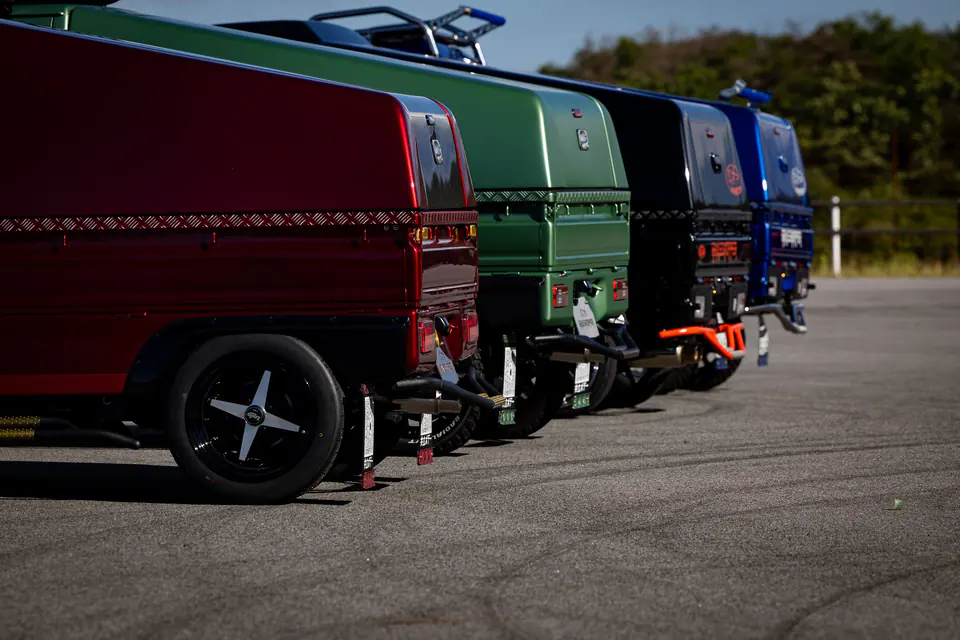
A box body's weak points are the roof seams, the doors and the mounts that hold it to the frame, so check those first. Water that gets in through a seam rots the floor and rusts the frame underneath. Open and close every door, check the seals and hinges, and look under the truck where the box bolts down.
A refrigerated body adds an insulated box and a cooling unit. Run it until it reaches temperature before you buy, listen to the compressor, and treat oily fittings as a sign of a refrigerant leak. Refrigerants are regulated, so use a certified technician; for the truck's own air conditioning, the Environmental Protection Agency (EPA) requires anyone servicing it for pay to be certified under Section 609 (EPA). Parts for the cooling unit come from its maker rather than the truck maker, so confirm support before you pay extra for one.
Can you buy a Kei fire truck?
Yes, though they are uncommon: Japanese cities issue Kei Trucks carrying small portable power pumps to volunteer fire corps units, and retired ones occasionally reach export. They leave service through municipal disposal rather than regular used-car channels, so expect a long wait.
- The pump is usually a portable engine-driven unit. See whether it starts and moves water, and expect parts to come from Japan.
- Inspect water tanks, plumbing and the pump housing for corrosion, since water sits in these systems.
- Check the chassis as you would any Kei Truck; the fire equipment doesn't change the drivetrain.
Lights and sirens are the legal catch. Arizona, for example, bars red or red-and-blue lights visible from the front and most flashing lights on vehicles other than authorized emergency vehicles, with a narrow exception for historic emergency vehicles used only for hobby or display (A.R.S. 28-947). It also bars equipping a non-emergency vehicle with a siren (A.R.S. 28-954). Most states have similar rules, so cover or disconnect the warning lights and disable the siren before you register the truck.
What about crane bodies and Jumbo cabs?
Honda's 1994 Acty Crane shows the scale of a Kei crane: an electric-hydraulic hoist rated for 100 kg (220 lb), with a 1.1 m working radius and a removable remote control. Check the rated load plate, the rope for broken strands, the hook latch and the boom lock, and never lift more than the plate allows, because a light truck can tip when the boom swings out.
Daihatsu's Jumbo cab extends the cab rearward for more headroom and room to recline the seats. Kei Truck length is fixed by the class rules, so a longer cab means a shorter bed; measure before you buy bed-sized accessories or a camper. Mechanical parts are shared with the standard Hijet, so see Hijet truck parts and the Daihatsu Hijet guide.
How do you register a Kei Truck with a specialty body?
A dump bed, box or crane doesn't change whether your state allows Kei Trucks on its roads: the same rules apply as for a flatbed, so start with the Kei Truck laws hub.
- Bring the export certificate with an English translation. It lists the body shape recorded in Japan, which helps the DMV describe the truck correctly.
- States that inspect will check lights, mirrors and other equipment, so disable any emergency gear first.
- Business use brings other rules. A food truck answers to your local health department, which typically bases its rules on the Food and Drug Administration (FDA) Food Code, a model code that state and local agencies adopt (FDA). Design to those rules from the start rather than converting a Japanese layout.
Before you import a specialty truck, read the auction sheet guide and the Kei Truck buying guide: equipment notes and photos are your only view of the hydraulics until the truck lands.
Frequently asked questions
Are Kei dump trucks worth the extra cost?
If you move loose material often, usually yes. A factory dump bed unloads gravel, soil, feed or mulch in seconds, and its hydraulics were designed with the truck. Expect to pay more than for a flatbed, check the pump and seals carefully, and remember that the body adds weight without raising the 350 kg rated load.
Can you use the lights and siren on a Kei fire truck?
Generally not on public roads. States reserve red and blue warning lights, flashing lights and sirens for authorized emergency vehicles, and Arizona, for example, bars non-emergency vehicles from even being equipped with a siren. Cover or disconnect the warning lights and disable the siren before registering, and check your own state's rules.
Does a dump bed reduce a Kei Truck's payload?
The rating stays the same, but the truck gets heavier. Honda kept the standard 350 kg rated load on its 1994 Acty Dump while listing the dump trucks at 840-920 kg depending on bed and drivetrain. Treat 350 kg as the cargo limit, and expect a loaded dump truck to accelerate slower and need more room to stop.
Can you turn a Kei Truck into a food truck?
Yes, but build it to your local health department's rules, which typically follow the FDA Food Code, rather than relying on a Japanese kitchen layout. Plan sinks, water tanks, ventilation and surfaces with the inspector first, keep the whole build within the truck's rated load, and run any generator well away from windows and the serving hatch.
Where do you find parts for a Kei dump bed or crane?
Engine, brake and chassis parts are the same as for the base truck, so order them by chassis code. A local hydraulic shop can often make up hoses and fittings to match the originals. Pumps, cylinders and controls are specific to the body builder, so check their condition carefully before you buy the truck.