On this page
Key facts
- Japanese class
- Kei (keijidosha), Japan's light motor vehicle category
- Size limit since October 1998
- Length 3.40 m, width 1.48 m, height 2.00 m
- Engine limit
- 660 cc since 1990
- Rated load
- 350 kg (about 770 lb)
- Seats
- 2
- Makers
- Suzuki, Daihatsu, Honda, Subaru, Mitsubishi
- US import eligibility
- 25 years from the build month: built October 2001 or earlier, as of October 2026
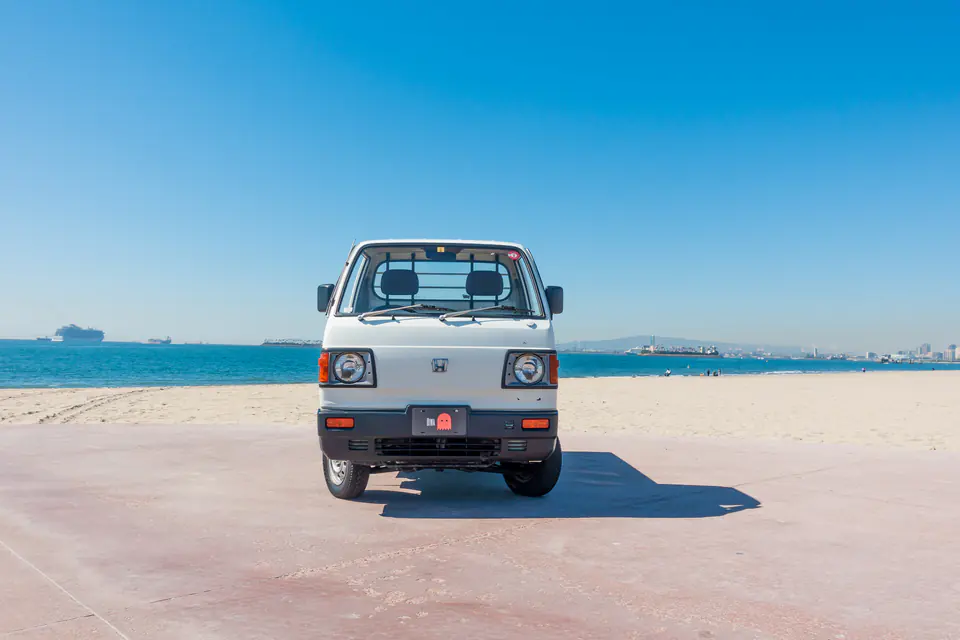
A Kei Truck is a small pickup built to Japan's light-vehicle rules. It pairs a 660 cc engine with a two-seat cab at the very front and a flat bed that fills most of its length. Japanese farmers and tradespeople have used them for decades, and US owners now put them to work on farms, ranches, hunting land and job sites.
What does Kei Truck mean?
Kei is short for keijidosha, Japan's class of registered light motor vehicles, which today tops out at 660 cc and 3.40 m in length. A rough translation is "light automobile." A Kei Truck is the pickup body style inside that class, which Japanese owners shorten to keitora and Americans often call a Japanese mini truck.
The class is a legal category with real benefits in Japan. A vehicle that stays inside the limits wears its own color of license plate and pays a lower annual vehicle tax than a regular car. Makers build right up to those limits, so rival trucks from the same era measure within a few centimeters of each other.
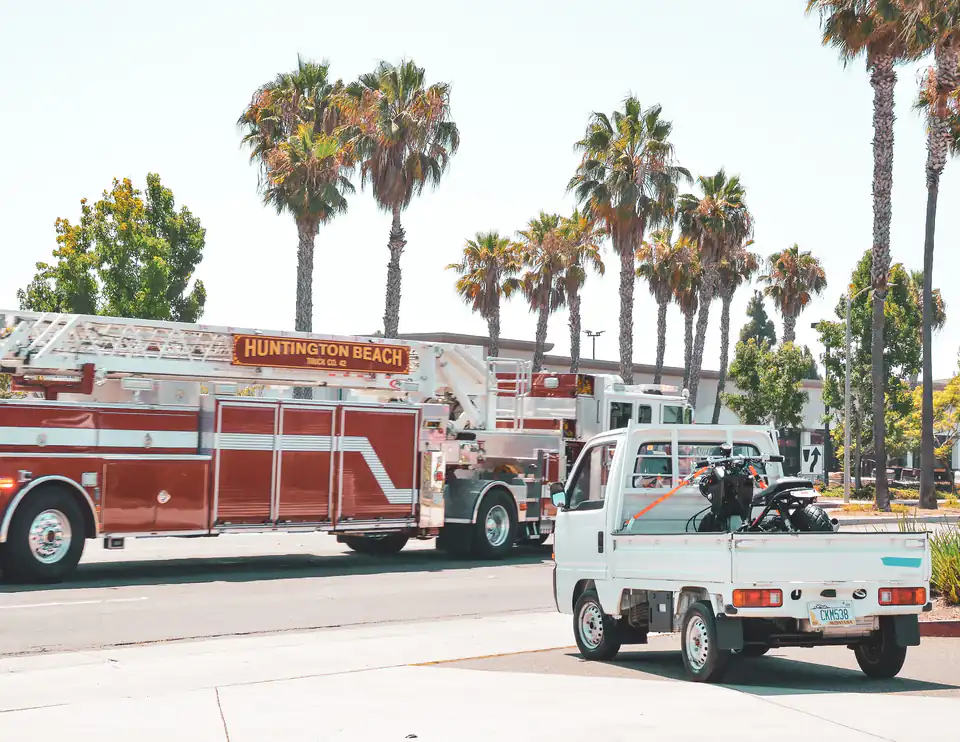
One caution: "mini truck" has also been used in the US for small off-road utility vehicles never registered for road use anywhere. A Kei Truck was registered, inspected and driven on Japanese roads, with headlights, turn signals, seat belts, a heater and a glass windshield with wipers.
What are the Kei class rules?
Since October 1998, a four-wheeled Kei vehicle can be no longer than 3.40 m, no wider than 1.48 m and no taller than 2.00 m, and its engine can't exceed 660 cc. Those limits sit in Appended Table 1 of the enforcement regulation for Japan's Road Transport Vehicle Act. The box has grown in steps:
| Rules in force | Engine limit | Max length | Max width | Max height |
|---|---|---|---|---|
| 1955-1975 | 360 cc | 3.00 m (118.1 in) | 1.30 m (51.2 in) | 2.00 m (78.7 in) |
| 1976-1989 | 550 cc | 3.20 m (126.0 in) | 1.40 m (55.1 in) | 2.00 m (78.7 in) |
| 1990 to September 1998 | 660 cc | 3.30 m (129.9 in) | 1.40 m (55.1 in) | 2.00 m (78.7 in) |
| October 1998 to today | 660 cc | 3.40 m (133.9 in) | 1.48 m (58.3 in) | 2.00 m (78.7 in) |
Two more numbers shape every Kei Truck:
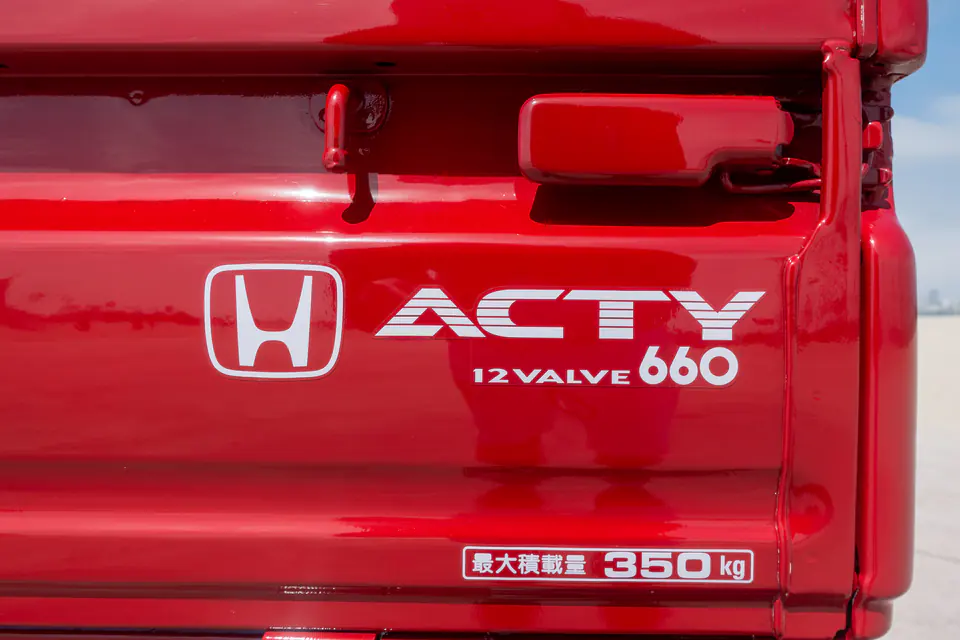
- 350 kg rated load. Maker spec sheets and Japanese registrations rate each truck to carry 350 kg (about 770 lb) of cargo.
- 64 PS output ceiling. Since the late 1980s, Japanese makers have held Kei engines to 64 PS (47 kW, about 63 hp) by voluntary agreement, not by statute. Naturally aspirated Kei Trucks of the 1990s were rated at 38 to 50 PS, and only turbo or supercharged versions come close to the ceiling.
US buyers notice the 1998 change most. The larger trucks launched in early 1999: the Carry, Hijet and Minicab in January, the Sambar in February and the Acty in May. They measure about 3,395 x 1,475 mm (133.7 x 58.1 in), while most 1990s trucks measure about 3,295 x 1,395 mm (129.7 x 54.9 in). Our Kei Truck specs and dimensions page has the numbers model by model.
Who makes Kei Trucks?
Five Japanese makers built the Kei Trucks you can import today: Suzuki, Daihatsu, Honda, Subaru and Mitsubishi. Each used its own engine and layout, and some trucks were also sold under other brands.
| Truck | Main 660 cc chassis codes | Engine | Engine location | Other badges |
|---|---|---|---|---|
| Suzuki Carry | DC51T/DD51T, DA52T/DB52T | F6A, 657 cc, 3-cylinder | Under the seats | Mazda Scrum |
| Daihatsu Hijet | S82P/S83P, S100P/S110P, S200P/S210P | EF, 659 cc, 3-cylinder | Under the seats | Toyota Pixis Truck (newer trucks) |
| Honda Acty | HA3/HA4, HA6/HA7 | E07A or E07Z, 656 cc, 3-cylinder | Midship, under the bed | None |
| Subaru Sambar | KS3/KS4, TT1/TT2 | EN07, 658 cc, 4-cylinder | Rear, behind the axle | None while Subaru built it |
| Mitsubishi Minicab | U41T/U42T, U61T/U62T | 3G83, 657 cc, 3-cylinder | Under the seats | Nissan Clipper (2003-2013) |
A few details the table can't hold:
- Paired codes usually split 2WD and 4WD: a DA52T Carry is 2WD, and a DB52T is 4WD.
- Mazda has sold the Carry as the Scrum since 1989, so a Scrum shares its mechanical parts.
- Subaru built its own rear-engine Sambar until February 2012. Later Sambars are rebadged Hijets.
- Honda never rebadged the Acty and ended Acty truck production in April 2021.
- The Nissan Clipper, Toyota Pixis Truck and Carry-based Minicabs sold since 2014 are too new for the 25-year rule.
Our Kei Truck model comparison matches each truck to a job.
Why do Americans buy Kei Trucks?
A Kei Truck carries a rated 350 kg in a footprint about 11 feet long, which covers much of what a full-size pickup does around a property for far less money. What owners get:
- A big bed for the footprint. Suzuki's 1999 spec sheet lists an inside bed of 1,940 x 1,410 mm (76.4 x 55.5 in), and the left, right and rear sides all drop down.
- Tight turning. Suzuki and Honda list turning radii of 3.8 to 4.4 m (about 12.5 to 14.4 ft), handy in barn aisles and orchard rows.
- Light weight. Standard-bed trucks weigh about 650 to 870 kg (1,430 to 1,920 lb) empty, easy on lawns and soft fields.
- Useful 4WD. Many trucks have part-time 4WD with a low range or an extra-low first gear. Honda's 1994 launch notes for the Acty Attack list an ultra-low gear and a rear diff lock.
- Low fuel use. Official Japanese figures for 1999-2007 Carry, Acty and Sambar trucks run about 14 to 18 km/L, roughly 34 to 41 mpg, on Japan's old 10-15 test cycle. Loaded or highway driving returns less.
- A real cab. Doors, windows, a heater and wipers come standard, and many trucks left the factory with air conditioning.
- A modest price. A running import usually costs a fraction of a new full-size pickup or work UTV. Our Kei Truck cost guide has the landed math.
Is a Kei Truck a UTV or a low-speed vehicle?
No: a Kei Truck is a road-registered Japanese truck, not an off-highway machine, and it is far faster than the 25 mph federal ceiling for low-speed vehicles. Here is what it is not:
- Not a UTV. The Consumer Product Safety Commission (CPSC) describes recreational off-highway vehicles as machines with off-road tires, a rollover protective system and top speeds above 30 mph. A Kei Truck was designed, sold and registered as an on-road truck. See our Kei Truck vs UTV comparison.
- Not built to FMVSS. Federal Motor Vehicle Safety Standards (FMVSS) set the crash and equipment rules every new US-market vehicle must meet. Kei Trucks were engineered to Japan's standards and never certified for US sale, which is why they can only enter under the 25-year exemption.
- Not a low-speed vehicle (LSV). Federal rules at 49 CFR 571.3 define an LSV as a four-wheeled vehicle that tops out above 20 mph and no faster than 25 mph. Kei Trucks easily exceed that, although some states still restrict which roads they may use.
- Not a scaled-down full-size truck. The rated load is 350 kg, engines make well under 64 PS, and none of the maker spec sheets we reviewed lists a towing rating.
Can you import a Kei Truck and drive it on the road?
Yes, once it is at least 25 years old, but road use is decided state by state. Subsection (b)(9) of 49 U.S.C. 30112 exempts "a motor vehicle that is at least 25 years old" from the FMVSS import bar. The importer declares that age in box 1 of the HS-7, the import declaration form of the National Highway Traffic Safety Administration (NHTSA), which tracks 49 CFR 591.5(i). Age counts from the month of manufacture, so as of October 2026 a truck built in October 2001 or earlier qualifies. The Environmental Protection Agency (EPA) handles emissions eligibility through its own import declaration, EPA Form 3520-1. Our 25-year rule guide and step-by-step import guide cover both.
Clearing customs does not make a truck road-legal. Each state decides whether to title and register Kei Trucks, with answers that run from ordinary plates to off-road titles only, and some limit them to lower-speed roads. Look up the Kei Truck laws by state before you spend money. If your state does plate the truck, the Japanese plate bracket won't line up with a US plate's mounting holes, and a Kei Truck license plate adapter fixes that.
What should you check before buying a Kei Truck?
Once a work truck passes 25 years, its condition matters more than its badge. Start with these five checks:
- Build month. Read it from the chassis plate or the export paperwork, not from a model year in an ad.
- Title history. Some trucks already in the US carry off-highway titles or brands that a state may refuse to convert.
- Rust. Frame rails, the bed floor, cab corners and rocker panels decide how long a truck lasts.
- Timing belt. Almost every importable engine (F6A, EF, E07A/E07Z, EN07 and 3G83) uses a rubber timing belt; the chain-driven Suzuki K6A of late 2001 is the exception. Without a receipt, plan to replace the belt and water pump. Oiwa Garage stocks Kei Truck timing belt kits for the common engines.
- Tires. The factory size is a 12-inch light-truck radial (145R12). Tires fitted in Japan may lack the DOT marking that some state inspections check.
Our Kei Truck buying guide has the full inspection checklist, and the Kei Truck maintenance page covers the first services.
Frequently asked questions
Is a Kei Truck the same as a Japanese mini truck?
Yes. Japanese mini truck is the usual American name for a Kei Truck, a small pickup built to Japan's Kei size and 660 cc engine limits. The phrase has also been applied loosely to off-road utility vehicles built elsewhere, so confirm that any truck you consider was originally registered for road use in Japan.
What does Kei mean in Kei Truck?
Kei comes from keijidosha, Japan's light motor vehicle class. A vehicle in the class can't exceed 3.40 m in length, 1.48 m in width, 2.00 m in height or 660 cc of engine displacement. In return it gets its own plate color and a lower annual vehicle tax in Japan. A Kei Truck is the pickup version.
How fast can a Kei Truck go?
Most stock 660 cc trucks are happiest at about 45 to 55 mph and top out somewhere around 60 to 70 mph on level ground. Those are approximate, owner-reported figures that vary with gearing, load and engine condition. Some states also restrict where a Kei Truck may drive, so the legal limit can sit below the truck's top speed.
How much can you haul in a Kei Truck?
Each Kei Truck is rated for a maximum load of 350 kg, about 770 lb, on its Japanese paperwork. The bed can physically hold more, but the springs, tires and brakes were sized around that number. Treat it as the working limit, and remember that racks, toolboxes and campers all count against it.
Is a Kei Truck legal to drive in the US?
It depends on your state. Federal law lets anyone import a Kei Truck once it is 25 years old, but each state decides whether to title and register it for the road. Some states issue ordinary plates, some allow road use with speed or road-type limits, and some offer only off-road titles. Check your state's rules before you buy.
Do all Kei Trucks have 4WD?
No. Every maker sold 2WD and 4WD versions, and the chassis code usually tells you which one you are looking at. A Carry DA52T is 2WD, for example, while a DB52T is 4WD. Many 4WD trucks add a low range or an extra-low first gear, and some work trims have a rear differential lock.