On this page
Key facts
- Kei Truck road status
- Titled motor vehicle in states that register them
- UTV road status
- Off-highway vehicle; road use only where a state or local rule allows
- Kei Truck rated load
- 350 kg (about 770 lb)
- UTV cargo box
- Often about 600 to 1,000 lb on work models (approx.)
- Kei Truck cab
- Enclosed steel cab with heater and wipers
- Top speed
- Kei Truck about 60 to 70 mph (approx.); utility UTVs about 25 to 50 mph (CPSC)
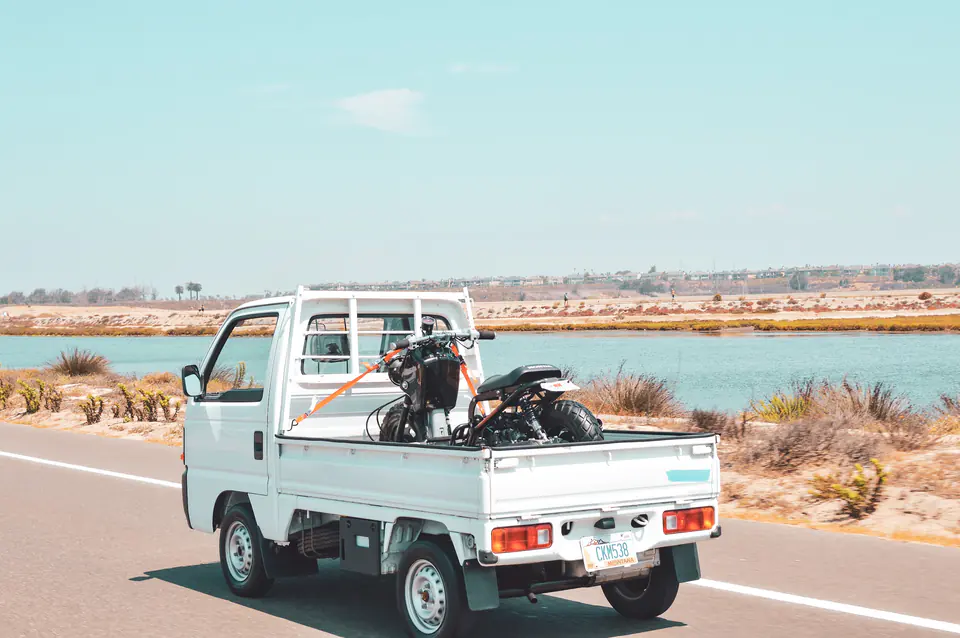
Kei Trucks and UTVs get bought for the same chores: feeding stock, hauling firewood, checking fence and reaching a deer stand. They come from different worlds, though. A Kei Truck is a 25-year-old Japanese road truck, and a UTV is a purpose-built off-highway machine. Here is how they stack up.
Is a Kei Truck or a UTV better?
Neither wins everywhere: a Kei Truck is a titled road vehicle with a 350 kg rated bed, while a UTV is an off-highway machine built for rough ground. "UTV" (utility task vehicle) is the common name for a side-by-side, a machine with a steering wheel, side-by-side seats, foot pedals and a cargo box. The Consumer Product Safety Commission (CPSC) describes recreational off-highway vehicles as having off-road tires, a rollover protective system and top speeds above 30 mph, and it puts utility-focused models at roughly 25 to 50 mph.
A Kei Truck comes from the other direction. It was built, registered and inspected for Japanese roads, and it has an enclosed steel cab; our guide to what a Kei Truck is covers the background. The right choice depends on where you spend your hours: on roads and in weather, or across rough country.
How do Kei Trucks and UTVs compare?
Here are the two side by side across ten factors, with approximate figures labeled.
| Kei Truck | UTV (side-by-side) | |
|---|---|---|
| Price new | Not sold new in the US; imports must be 25 years old | Roughly $10,000 to $30,000 base price for utility models, plus about $1,000 to $1,500 for freight and setup (approx., 2026 models) |
| Price used | Roughly $6,000 to $12,000 for a running truck (estimate, October 2026) | Varies widely with age, hours and options |
| Road legality | Titled motor vehicle in states that register them; some states limit roads or speed | Off-highway vehicle; limited road access only where a state or local rule allows |
| Top speed | About 60 to 70 mph, comfortable at 45 to 55 (approx.) | About 25 to 50 mph for utility models (CPSC); sport models faster |
| Cab | Enclosed steel cab with doors, glass, heater and wipers | Open or partly enclosed as standard; full cabs, heat and A/C are options on many models |
| Payload and bed | 350 kg (about 770 lb) rated; bed about 76 x 55 in on 1999-on trucks | Cargo box often rated about 600 to 1,000 lb on work models (approx.) |
| Towing | No rating in the maker spec sheets we reviewed | Many work models rated about 1,500 to 2,500 lb (approx.) |
| Maintenance | Car-style service; timing belt on most engines; parts by mail order | Dealer network; hour-based service; drive belt wear on CVT models |
| Resale | Depends on title type, rust and your state's rules | Depends on model year, hours and warranty |
| Insurance | Auto policy where registered; some insurers decline or offer collector-style policies | Powersports policy |
Which one can you drive on public roads?
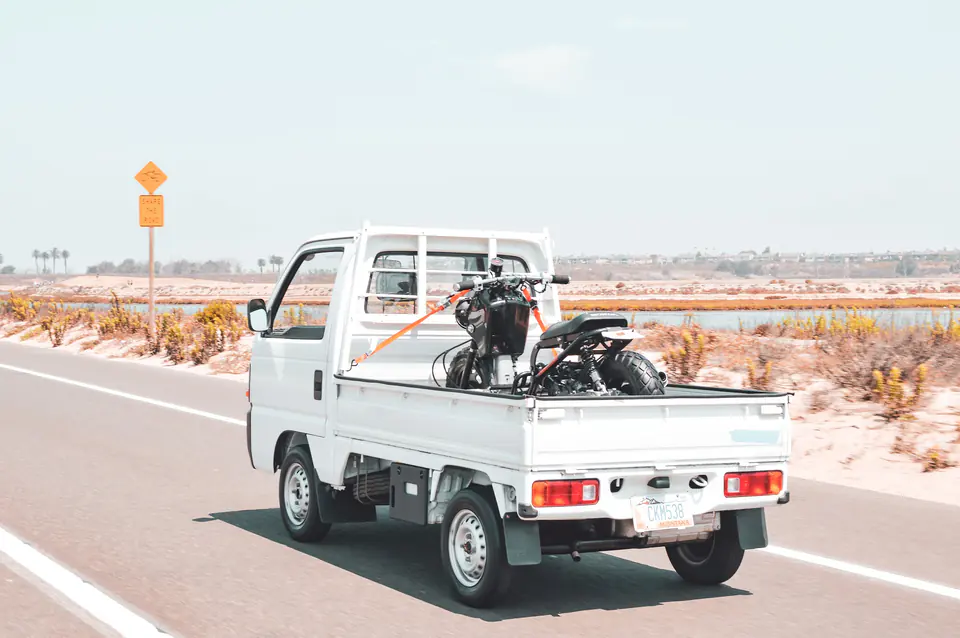
Once a Kei Truck is imported under the federal exception for vehicles 25 years and older (subsection (b)(9) of 49 U.S.C. 30112), any state that registers Kei Trucks can title and plate it, while a UTV starts life as an off-highway vehicle. From there, your state decides. Some states title Kei Trucks the same way they title a pickup, others add road or speed limits, and some refuse road registration altogether. UTV road access, where it exists, usually comes from a specific state law or local ordinance, with equipment requirements and limits on which roads qualify.
Kei Trucks are not low-speed vehicles either. Federal rules (49 CFR 571.3) define a low-speed vehicle (LSV) as a four-wheeled vehicle that tops out above 20 mph and no faster than 25 mph, and a Kei Truck is far faster. Before buying either machine for road use, check the Kei Truck laws by state and your local rules for off-highway vehicles.
Which costs less to buy and own?
The Kei Truck usually wins on price: a running one costs roughly $6,000 to $12,000 from a US seller (estimate, October 2026), against roughly $10,000 to $30,000 for a new utility side-by-side before options. Importing one yourself adds ocean freight, customs fees and a 25% duty, since trucks fall under heading 8704 of the Harmonized Tariff Schedule (HTS); our Kei Truck cost guide itemizes the landed total.
Running costs favor the truck too. Official Japanese test figures for the Carry, Acty and Sambar work out to roughly 34 to 41 mpg on Japan's old 10-15 cycle, and wear parts are cheap car-style items. The big scheduled job is the timing belt, which most 1990s Kei engines use; budget a Kei Truck timing belt kit and water pump if the history is unknown. A new UTV brings what a 25-year-old import can't: a dealer, a warranty and financing.
Which is better off-road?
A UTV is better in rough terrain, and the numbers show why: a stock Kei Truck has only about 145 to 200 mm (5.7 to 7.9 in) of ground clearance, going by maker and catalog figures. UTVs are designed around long suspension travel, aggressive tires and high clearance, and they can cross rough ground at speeds that would punish a Kei Truck.
The Kei Truck still holds its own at a working pace. Most 4WD versions are part-time systems, many with a low range or an extra-low first gear, and a few work trims add a rear diff lock. That is plenty for pasture, logging trails, snow and mud. A modest lift with slightly larger tires buys clearance, and Oiwa Garage carries Kei Truck lift kits and LED light bars for night work off the road; check your state's rules before using auxiliary lights on public roads. Our Kei Truck off-road guide and Kei Truck mods guide cover the details.
Which hauls and tows more?
For cargo space the Kei Truck and its 350 kg (about 770 lb) rated bed usually win, and for towing the UTV does. A 1999-on Kei Truck bed measures about 1,940 x 1,410 mm (76.4 x 55.5 in) inside, with sides that drop on the left, right and rear. Work UTVs commonly rate their cargo boxes at about 600 to 1,000 lb (approx.), and their boxes are usually shorter than a Kei Truck bed. Our Kei Truck specs page lists bed sizes by model.
Towing reverses the result. Many work UTVs carry published towing ratings of about 1,500 to 2,500 lb (approx.). None of the Kei Truck spec sheets we reviewed lists a towing figure, and the trucks combine 660 cc engines with rear drum brakes. If you tow every week, a UTV or a full-size truck is the better tool.
Who should buy a Kei Truck, and who should buy a UTV?
Use a simple test: if your regular routes include public roads at 45 to 55 mph, start with a Kei Truck; if they cross rough country at speed, start with a UTV.
A Kei Truck fits you if you:
- need to drive on public roads, and your state allows it
- work through rain, snow and cold and want a heater and wipers
- haul bulky loads, feed or firewood more often than you climb rocks
- want low running costs and simple, do-it-yourself maintenance
- can live with 45 to 55 mph cruising
A UTV fits you if you:
- spend most of your time on rough trails, steep ground or deep mud
- tow trailers regularly
- want a new machine with a dealer and a warranty
- don't need road access
Still deciding which Kei Truck? Our Kei Truck model comparison matches each of the five to a job.
Frequently asked questions
Is a Kei Truck street legal where a UTV is not?
Often, yes. In states that register Kei Trucks, the truck gets a title and plates like other motor vehicles, sometimes with speed or road limits. A UTV, by contrast, is built for off-highway use and reaches public roads only where a state law or local ordinance allows it, usually with equipment rules. Check your own state's rules for both.
Which costs less, a Kei Truck or a UTV?
Usually. A running Kei Truck from a US seller typically costs about $6,000 to $12,000 (estimate, October 2026), while new utility side-by-sides commonly start around $10,000 and climb past $30,000 with cabs and options. Kei Trucks also burn little fuel and use inexpensive car-style parts. Import costs, registration and insurance vary by state.
Will a Kei Truck handle rough terrain as well as a UTV?
Not in the same way. A 4WD Kei Truck handles farm tracks, pasture, snow and mud at sensible speeds, and many have a low range or extra-low gear. It lacks a UTV's suspension travel and ground clearance, so it can't follow one across rough ground at speed. A small lift and better tires close part of the gap.
Can a Kei Truck tow a trailer?
The maker spec sheets we reviewed list no towing rating for these trucks, so any towing is at the owner's own judgment. Some owners pull small, light trailers at low speed with an aftermarket hitch. With a 660 cc engine and rear drum brakes, heavy loads are better handled by a UTV with a published rating or by a full-size truck.
Do I need special insurance for a Kei Truck?
Where your state registers it, a Kei Truck needs the same liability coverage as any other registered vehicle. Some standard insurers decline imported Kei Trucks, so owners often shop several companies or use collector-style policies, which may carry mileage or usage limits. A UTV used off-road is usually covered by a separate powersports policy.
How fast is a Kei Truck compared with a UTV?
A stock Kei Truck tops out around 60 to 70 mph and is happiest at 45 to 55 mph, based on approximate owner reports. The CPSC puts utility-focused off-highway vehicles at roughly 25 to 50 mph, and sport models run faster off-road. On pavement, only the Kei Truck was built for road speeds and traffic.
Sources
- U.S. Consumer Product Safety Commission: Recreational Off-Highway Vehicles
- 49 CFR 571.3, FMVSS definitions including low-speed vehicle (Cornell LII)
- 49 U.S.C. 30112, including the 25-year exception in subsection (b)(9) (Cornell LII)
- Harmonized Tariff Schedule of the United States, Revision 21 (2026), Chapter 87 (USITC)