On this page
Key facts
- Age rule
- 25 years from the build date, declared on HS-7 box 1
- EPA declaration
- Form 3520-1, code E (21+ years, original configuration)
- Duty on a Kei Truck
- 25% of the price paid (HTS 8704.31.01)
- Merchandise Processing Fee
- 0.3464%, $34.58 minimum, $670.86 maximum (from Oct 1, 2026)
- Harbor Maintenance Fee
- 0.125% of value
- Informal entry limit
- Value of $2,500 or less
- Typical timeline
- 6-12 weeks from payment to driveway (estimate)
Importing a Kei Truck is a paperwork project, not an engineering one. A truck that is 25 years old by its build date needs no modifications to satisfy federal law. It needs the right filings, in the right order, and a state that will title it when it lands.
This guide covers the whole process as of October 2026. The federal rules were checked against current sources from three agencies: U.S. Customs and Border Protection, or CBP; the National Highway Traffic Safety Administration, or NHTSA; and the Environmental Protection Agency, or EPA.
Can you import a Kei Truck from Japan yourself?
Yes, if the truck is at least 25 years old on the day it is entered at a US port. Imports normally have to meet FMVSS, short for Federal Motor Vehicle Safety Standards. Under 49 USC 30112(b)(9), that requirement doesn't apply once a vehicle reaches 25. You claim the exemption on DOT form HS-7 by checking box 1, which corresponds to the age exemption in 49 CFR 591.5(i).
The EPA runs its own test. Form 3520-1 code E covers vehicles at least 21 years old, counted in calendar years, in their original unmodified configuration. Any truck that passes the 25-year test passes this one too, unless its engine has been swapped.
Younger trucks are a different story. A Kei Truck under 25 can't come in for road use. It can only enter as off-road equipment, permanently limited to 25 mph and certified to nonroad emission standards, and that status generally follows the truck. Our 25-year rule guide explains how to prove the build month.
A private person can be the importer. Nothing requires a broker. Most first-timers hire one anyway, because some filings must be sent electronically.
How do you import a Kei Truck, step by step?
The process runs 12 steps, from the first phone call to the plate on the bumper. Order matters. Checking your state and lining up your US-side help come before you pay for a truck.
Confirm your state will register it
Read your state's Kei Truck page and get the titling office's answer in writing before you shop. Federal clearance does not guarantee a plate.
Pin down the build month
Get proof of the month the truck was built and count 25 years to the day it will be entered at a US port, not the day you pay. If the only date you have is the first-registration month on the export certificate, plan around that later date.
Line up your US-side help
Decide whether you will clear the truck yourself or use a licensed customs broker, and ask what documents they need from Japan. Either way, the Importer Security Filing has to be sent electronically, so you need a filer.
Choose a seller and buy
Buy from a Japanese exporter's stock, or have an auction agent bid for you. Ask for the original auction sheet or an inspection report, photos of the underside and the chassis number, and an invoice that lists the truck price apart from fees.
Let the seller handle export paperwork
In Japan, the truck is taken off the registry, the export certificate is issued, the export declaration is filed and the ship is booked. Ask for the underside to be washed, because US agriculture rules require it to arrive free of soil.
File the Importer Security Filing
Your filer sends the ISF electronically, backed by a bond. For container cargo it is due 24 hours before loading in Japan. Roll-on/roll-off cargo counts as break bulk; if the carrier holds that exemption, it is due 24 hours before arrival in the US.
Track the ship and get the bill of lading
Collect the original bill of lading or the carrier's electronic release, and watch for the arrival notice. Ocean transit is roughly two to three weeks to the West Coast and longer to other coasts (estimate).
File the customs entry
A truck valued at $2,500 or less may qualify for informal entry. Above that, file a formal entry on CBP Form 7501 with a customs bond. Declare HS-7 box 1, the 25-year box, and EPA 3520-1 code E.
Pay duty and fees
Pay 25% duty on the price paid for the truck, the Merchandise Processing Fee and the 0.125% Harbor Maintenance Fee. Keep the paid and released entry papers, because your DMV will ask for them.
Get the truck released from the port
Once customs releases it, pay the terminal's charges and collect it before the free storage days run out. If customs or agriculture inspectors flag it, expect an exam or a wash at your cost.
Get it home
Use a trailer or a car carrier. An imported truck with no US title or registration can't be driven on public roads, though some states sell short-term transit permits.
Title and register it
Take the export certificate with a certified English translation, the bill of sale, your HS-7 and EPA 3520-1 forms, the released CBP entry, proof of insurance and any VIN or chassis inspection form your state requires.
Buying in Japan: exporter stock or an auction agent
You can't bid at Japan's dealer auctions yourself, because only licensed dealers can join them. That leaves three routes, each with a trade-off:
- An exporter's stock. Fixed prices, English listings and photos. The exporter handles deregistration, export papers and the ship booking, and the price per truck reflects that service.
- An auction agent. The agent bids at dealer auctions for you, usually for a flat fee plus a refundable deposit. You get the widest choice and an inspector's sheet on every lot, so you need to read that sheet well.
- A proxy for Japanese domestic listings. A proxy buys from sites aimed at Japanese buyers and arranges the export. It turns up trucks the other routes miss, but condition reports aren't standardized. It suits repeat importers best.
Wire money only to a business you have checked, and get the invoice first. Ask exactly what the fee covers. Inland transport to the port, export inspection and the ocean booking are sometimes billed separately.
RoRo or container?
Roll-on/roll-off (RoRo) ships drive vehicles aboard like a ferry. It is the usual choice for a running truck and usually the cheapest. A container costs more unless you share one, but it protects the truck and can carry a non-runner or a box of spare parts. On a RoRo ship, plan to empty the cab and bed, since carriers commonly refuse loose cargo inside vehicles.
What documents do you need to import a Kei Truck?
At the port, CBP asks for the original bill of lading, the bill of sale, the foreign registration and any other papers covering the vehicle, along with the HS-7 and the EPA 3520-1. Your state will want most of the same documents later, so keep originals and copies together.
| Document | Who produces it | Why it matters |
|---|---|---|
| Export certificate (Japanese deregistration certificate) | Seller or exporter in Japan | Proves the truck left the Japanese registry and shows its first-registration year and month. DMVs want a certified English translation. |
| Commercial invoice or bill of sale | Seller | Shows the price paid, which sets your duty. Ask for the truck price listed apart from fees. |
| Bill of lading or electronic release | Shipping line or forwarder | Proves shipment. You need it to collect the truck. |
| Importer Security Filing (ISF) | You, through a filer | Security data customs requires for ocean cargo, sent electronically before the deadline. |
| CBP Form 7501 or an informal entry | You or your broker | The customs entry. The paid and released entry is what DMVs ask to see. |
| DOT HS-7, box 1 | You or your broker | Tells NHTSA the truck has reached 25 years of age. |
| EPA 3520-1, code E | You or your broker | Declares a vehicle 21 or more years old in original configuration. |
| Customs bond | A surety, usually arranged by your broker | Required for a formal entry and for the ISF. |
| Auction sheet or inspection report | The auction or the seller | Not required by law, but your best record of condition and mileage. |
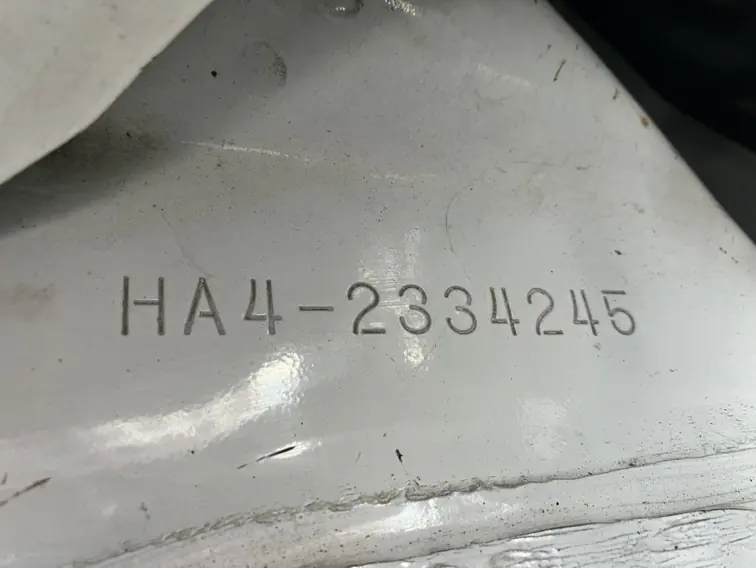
Japanese Kei Trucks carry a short chassis number, such as HA4 followed by a serial, instead of a 17-character VIN. Make sure the number on the export certificate, the invoice, the bill of lading and the frame stamp all agree. A mismatch can stall both the entry and the title.
Do you need a customs broker, and what is informal entry?
No law requires a broker, and the $2,500 value line decides which kind of customs entry you can use.
Informal entry: value of $2,500 or less
Shipments worth $2,500 or less may use informal entry (19 CFR 143.21). The Merchandise Processing Fee (MPF) is then a flat charge of $2.77 to $12.45 for fiscal year 2027, depending on how the entry is filed. You pay the duty when the entry is made, and you can present it yourself at the port.
Two caveats apply. CBP can still require a formal entry whenever it sees fit (19 CFR 143.22). The regulation also has a $250 cap for goods listed under Chapter 99 tariff headings, and a Japanese vehicle entered in 2026 has to list them. CBP suspended that cap in April 2025 until further notice. In October 2026 it proposed deleting the cap for good, while also requiring informal entries to be filed electronically and backed by a bond. That proposal is not final.
Formal entry: value over $2,500
Above $2,500 you file a formal entry on CBP Form 7501 with a customs bond. The MPF is 0.3464% of value, with a $34.58 minimum and a $670.86 maximum for entries from October 1, 2026. A Kei Truck valued under about $9,980 pays the minimum. You can file a formal entry as your own importer of record, but the bond and the filing setup push most people toward a licensed customs broker.
The ISF is electronic either way
The Importer Security Filing must go through a CBP-approved electronic system, with a bond behind it. Individuals usually pay a filer or their broker to send it. CBP treats RoRo cargo as break bulk, and break bulk still needs an ISF. CBP can claim $5,000 for a late filing and another $5,000 for an inaccurate one.
Do it yourself, hire a broker or buy one already here
| Approach | What you handle | Good fit if |
|---|---|---|
| Do it yourself | Buying, the ISF through a filer, the entry at the port, pickup | The truck is worth $2,500 or less, you live near the port and you like paperwork |
| Hire a licensed customs broker | Buying and pickup, while the broker files the ISF, entry, bond, HS-7 and EPA data | You want the federal side done right the first time |
| Buy from a local importer | Choosing the truck and transferring the title | You want to see the truck first and skip the wait |
Whichever you pick, talk to the broker or filer before you buy. They will tell you which documents they need from Japan, and the seller can prepare them at the time of sale.
How long does it take to import a Kei Truck?
Plan on 6-12 weeks from payment to driveway (estimate). Each stage below is a typical range, not a promise.
| Stage | Typical time (estimate) |
|---|---|
| Buying from stock or winning an auction | A few days to 3 weeks |
| Deregistration, export paperwork and trucking to the port | 1-3 weeks |
| Waiting for a vessel | 1-4 weeks |
| Ocean transit | About 2-3 weeks to the West Coast, longer to Gulf and East Coast ports |
| Customs entry and terminal release | 3-10 days |
| Transport home | 1-14 days |
| Title and registration | Days to several weeks, depending on your state |
Delays usually come from missing paperwork, a vessel that adds or skips a port call, or a customs or agriculture exam. Ask the terminal how many free storage days you get before daily charges start.
What duty and fees do you pay at the port?
A Kei Truck is a goods vehicle under HTS 8704.31.01, with a general duty rate of 25%. Duty is charged on the price paid for the truck. Ocean freight and insurance aren't part of that base, so keep them separate on the invoice. Add the MPF and the 0.125% Harbor Maintenance Fee (HMF).
As of October 2026, no extra tariff layer lands on a 25-year Kei Truck from Japan. The Section 232 auto tariff exempts vehicles whose build year is 25 or more years before the entry year. The Section 301 duties that began on July 24, 2026 bring Japanese goods with a lower base rate up to 12.5% in total, which adds nothing to a truck that already pays 25%. Kei Vans can be classified differently; see our Kei Van guide.
On a $2,500 truck, that comes to $625 of duty plus about $38 in fees on a formal entry. The Kei Truck cost guide has the full stack and a landed-cost calculator.
What goes wrong when people import a Kei Truck?
- Arriving too early. A truck that is under 25 when it is entered isn't eligible. CBP can refuse it, which usually means export or seizure at your expense. Count to the arrival date and leave a margin.
- A late ISF. Filing on time costs a filer's fee. Filing late can cost $5,000.
- A dirty underside. US agriculture rules require the undercarriage to be free of foreign soil. Have the seller wash it before it ships, or pay for a wash at the port.
- Storage charges. Terminals bill by the day once free time ends. Have the entry and pickup ready before the ship docks.
- Paperwork gaps. No export certificate, no translation or a chassis number that doesn't match will stall your title.
- A state that says no. Federal clearance doesn't guarantee a plate. Check your state's rules first.
- Buying blind. You are trusting photos and an inspector's report. Learn to read an auction sheet before you bid.
What should you do when the truck gets home?
Treat a fresh import as a truck with unknown service history. Unless there is a receipt, assume the timing belt is due on belt-driven engines, and change the water pump while the belt is off. A timing belt kit and a full set of filters are the usual first order. Most owners also need a plate adapter to mount the US plate.
Our maintenance guide covers service intervals engine by engine. If you would rather skip the import, see our guide to buying a Kei Truck in the US.
Frequently asked questions
Can I import a Kei Truck that is less than 25 years old?
Not for road use. A younger Kei Truck can only come in as off-road equipment, permanently limited to 25 mph and certified to nonroad emission standards, and that status generally stays with it. Bringing one up to US safety standards isn't practical. If the truck you want is close, wait until its build month is 25 years past before it lands.
Do I have to use a customs broker for a Kei Truck?
No law requires one. You can act as your own importer and present an informal entry at the port if the truck is worth $2,500 or less. You still need a filer with electronic access for the Importer Security Filing. For formal entries, most people hire a licensed customs broker to handle the bond, the entry and the HS-7 and EPA data.
What does HS-7 box 1 mean?
The HS-7 is the Department of Transportation declaration filed for every imported motor vehicle. Box 1 is the age box: checking it claims the exemption for vehicles that have reached 25 years, set out in 49 CFR 591.5(i), so US safety standards don't apply. Keep a copy, because many state DMVs ask for it when you title the truck.
Which EPA code do I use for a Kei Truck?
Use code E on the EPA's form 3520-1. It covers vehicles at least 21 years old, figured as the import year minus the build year, in original unmodified configuration. A replacement engine only qualifies if it is the same model as the original or meets the narrow aftertreatment condition printed on the form.
How much duty do I pay to import a Kei Truck?
Kei Trucks pay 25% of the price paid for the truck under HTS 8704.31.01. Ocean freight and insurance are not part of that base. Add the Merchandise Processing Fee, $34.58 minimum on a formal entry from October 1, 2026, and the 0.125% Harbor Maintenance Fee. Passenger-type Kei Vans can pay less.
How long does it take to import a Kei Truck?
Most imports take 6-12 weeks from payment to driveway (estimate). Paperwork in Japan and waiting for a ship take the longest. Ocean transit runs about two to three weeks to the West Coast and longer to other ports. Customs entry, terminal release and the trip home usually add one to three weeks.
Sources
- 49 CFR 591.5, declarations required for importation (eCFR)
- CBP, Importing a Motor Vehicle
- EPA Form 3520-1, importation of motor vehicles and engines (August 2024)
- 19 CFR 149.2, Importer Security Filing requirement and timing (eCFR)
- CBP, Importer Security Filing frequently asked questions
- 19 CFR 143.21, merchandise eligible for informal entry (eCFR)
- CBP Dec. 26-14, customs user fees adjusted for fiscal year 2027 (Federal Register)
- CBP proposed rule, Low-Value Shipments, October 2026 (Federal Register)
This page explains the rules in plain English. It is not legal advice. Laws change and offices apply them differently, so confirm with your state DMV or county titling office before you buy or register a truck.